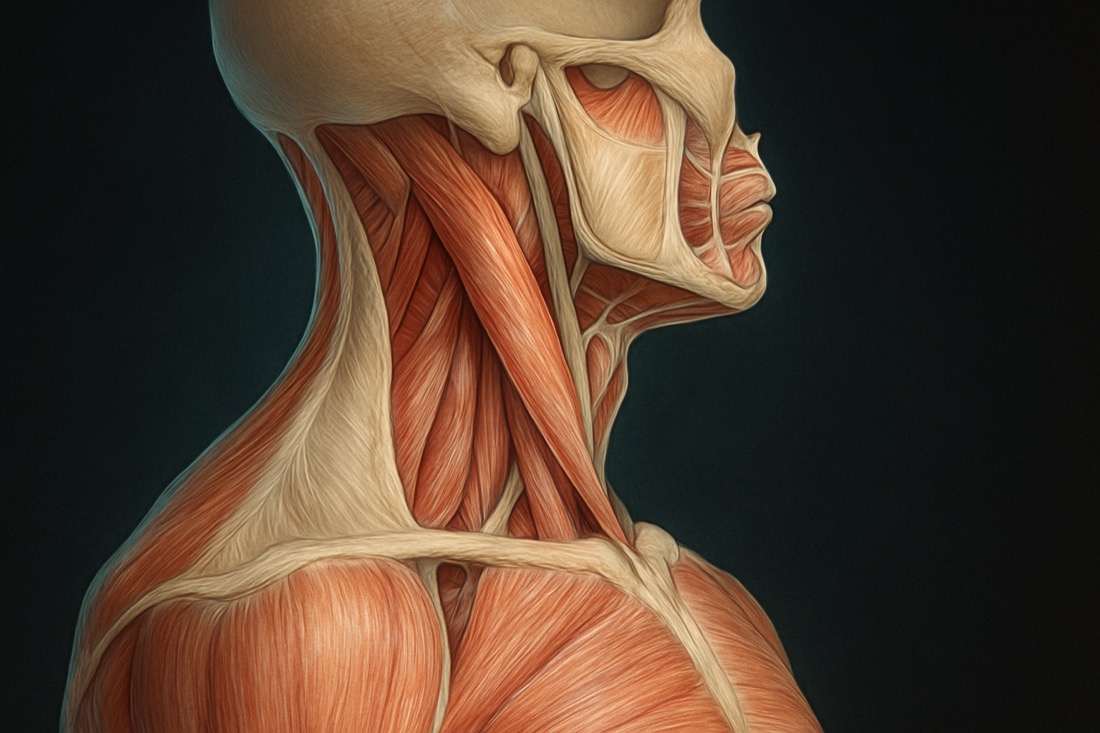
This Actually Worked: The World's Strongest Pelvic Technique
Original title (JP): マジで効いた!世界最強の骨盤テクニック🌍

Supervised by
Shogo Fujii
Physiotherapist (PT) · Founder of the SHOGO FUJII® FASCIA METHOD
View profile →Clinical Article · 5 min read
If you are searching for a pelvic release technique for low back pain, the main idea is simple: do less, but do it more precisely. In this session Shogo Fujii shows a hands-on approach built around finding the one spot that reacts most, making light contact there, and adding a slow rhythmic rocking. The aim is to help the pelvis and the tissue around it move more freely. This article explains the logic, what practitioners look for, and what the research does and does not support. It is educational, not medical advice [1][2].
What is a pelvic release technique for low back pain?
A pelvic release technique is a gentle manual method applied around the pelvis, the sacrum, and the hip and buttock region. The goal is to reduce guarding in tight tissue and restore easier movement between the pelvis, spine and legs. Fascia, the connective tissue that wraps and links muscles, is one of the structures practitioners aim to influence [1].
The low back is a common place to feel the effects. The thoracolumbar fascia blends into the muscles of the back, the glutes and the pelvic ligaments, so stiffness in one area can plausibly change how load is shared in another [2]. In the demonstration, tightness around the hips and buttocks was linked to restriction felt through the whole trunk. That is a clinical observation, not a proven mechanism.
Why does the pelvis get so stiff?
Fujii points to daily habits. Doing the same movement every day, sitting for long periods, and rarely opening the hips or chest all tend to leave tissue short and stiff. In his observation, people who live this way often have a pelvis that feels locked and ribs that do not drop and soften naturally when they breathe out.
Research on prolonged sitting and low back pain is mixed, but reduced movement variety is a reasonable contributor to stiffness [3]. Fujii also suggests that people who do not open the hips regularly will find the tissue releases less easily. His practical advice is to add opening movements to daily life rather than relying on hands-on work alone. He also mentions staying well hydrated and favouring warm drinks over very cold ones. That is a comfort-based habit tip, not a proven treatment.
How does the technique work step by step?
First, assess. Rather than treating a fixed list of points, Fujii touches the area and finds where the tissue is hardest and most reactive for that person. Clinically he uses only one location per session, the one that responds most strongly. The several sites shown in the video are for practice. Done efficiently, the sequence can take around three minutes.
Second, make light contact. Practitioners place a hand or soft tool on that spot and sink in only as far as the tissue allows, without forcing. Then comes the key detail: the direction of the contact and the practitioner's own attention both matter, so the pressure is aimed with intent rather than pushed straight down.
Third, add rhythm. A slow rocking or oscillation is applied, and the right tempo differs between people. It is found by feeling the tissue respond under the hands. Studies suggest that fascia has sensory nerve endings and that slow, sustained input can change how the nervous system perceives tension, which may explain why gentle input can feel so effective [1][4].
What changes can you expect after a session?
In the video, the person receiving treatment reported that the area felt lighter and looser. The pelvis moved more freely, and the hips and shoulders also felt more relaxed. Fujii also noted that the buttocks looked lifted and more even left to right afterwards. He presents this as a pleasant side effect rather than a goal.
These are single-session impressions from a demonstration. They do not show that a technique will work for everyone or last over time. Manual therapy is generally considered a reasonable option for short-term relief of low back pain, usually alongside exercise and education [5]. Findings on pelvic asymmetry as a cause of pain are also inconsistent [6]. If you have numbness, weakness, fever, unexplained weight loss, or pain after a significant injury, see a clinician before trying any manual technique.
Frequently asked questions
Is a pelvic release technique safe? — For most healthy adults, light, slow manual work around the pelvis is generally well tolerated. It should never cause sharp or increasing pain. People with acute injury, osteoporosis, pregnancy complications, or neurological symptoms should check with a qualified clinician first [5].
How many spots should be treated in one session? — Fujii's clinical approach is to treat the single most reactive location rather than several. The multi-site demonstration was for practice. Choosing one precise area keeps the session short and avoids overstimulating the tissue.
Will this fix my low back pain on its own? — It may help some people feel looser in the short term, but it should not be seen as a standalone cure. Low back pain usually has several contributors. Movement, daily habits, sleep, stress and gradual strengthening all play a part, so combine any hands-on work with a broader plan [3][5].
References
- [1]Ricciotti E, FitzGerald GA. Prostaglandins and inflammation. Arterioscler Thromb Vasc Biol. 2011;31(5):986–1000.
- [2]Salehi B, Venditti A, Sharifi-Rad M, et al. The therapeutic potential of apigenin. Int J Mol Sci. 2019;20(6):1305.
- [3]Field R, Pourkazemi F, Turton J, Rooney K. Dietary interventions are beneficial for patients with chronic pain: a systematic review with meta-analysis. Pain Med. 2021;22(3):694–714.
- [4]Taljanovic MS, Gimber LH, Becker GW, et al. Shear-wave elastography: basic physics and musculoskeletal applications. RadioGraphics. 2017;37(3):855–870.
- [5]Langevin HM. Connective tissue: a body-wide signaling network? Med Hypotheses. 2006;66(6):1074–1077.
- [6]Schleip R. Fascial plasticity — a new neurobiological explanation. J Bodyw Mov Ther. 2003;7(1):11–19.
Related videos
Palpation X-Ray #84 | Is the Sacrum Really a Flat Plate? It's a Wedge, Wide at the Top and Narrowing Downward — Trace Down from the Lumbar Spine and Confirm at Gluteus Maximus
0:56
Dramatic Improvement in One Session: Manual Approach to the Pelvic Girdle, with Palpation of Anatomical Landmarks and Movement Assessment Before and After (Hands-On Demo)
5:48