
Never Choose Surgery Again — The One Technique That Changed Spinal Stenosis Treatment
Original title (JP): もう手術は選ばない—脊柱管狭窄症を変えた1つの技術 藤井翔悟の世界をとった筋膜リリース!

Supervised by
Shogo Fujii
Physiotherapist (PT) · Founder of the SHOGO FUJII® FASCIA METHOD
View profile →Clinical Article · 6 min read
Spinal stenosis, a common condition causing debilitating low back pain, often leaves individuals searching for effective, non-surgical solutions. While traditional approaches focus on direct spinal decompression, emerging perspectives highlight the profound role of the body's fascial network. This article delves into the innovative application of **fascia release for spinal stenosis**, exploring how addressing myofascial restrictions, even in seemingly distant areas, can significantly alleviate discomfort and improve spinal mobility.
Why Does Spinal Stenosis Cause Low Back Pain?
Spinal stenosis occurs when the spaces within your spine narrow, often compressing nerves and leading to symptoms like low back pain, numbness, or weakness in the legs. While bony changes are a primary factor, the surrounding soft tissues, particularly fascia, play a critical and often overlooked role in the overall presentation of symptoms [1].
Fascia, a continuous web of connective tissue, envelops muscles, organs, and nerves throughout the body. When fascia becomes tight, restricted, or adheres to underlying structures, it can create tension that pulls on the spine, exacerbating the narrowing and contributing to the pain associated with spinal stenosis. This myofascial dysfunction can manifest as stiffness and limited movement, not just locally at the spine, but also in regions seemingly unrelated to the low back.
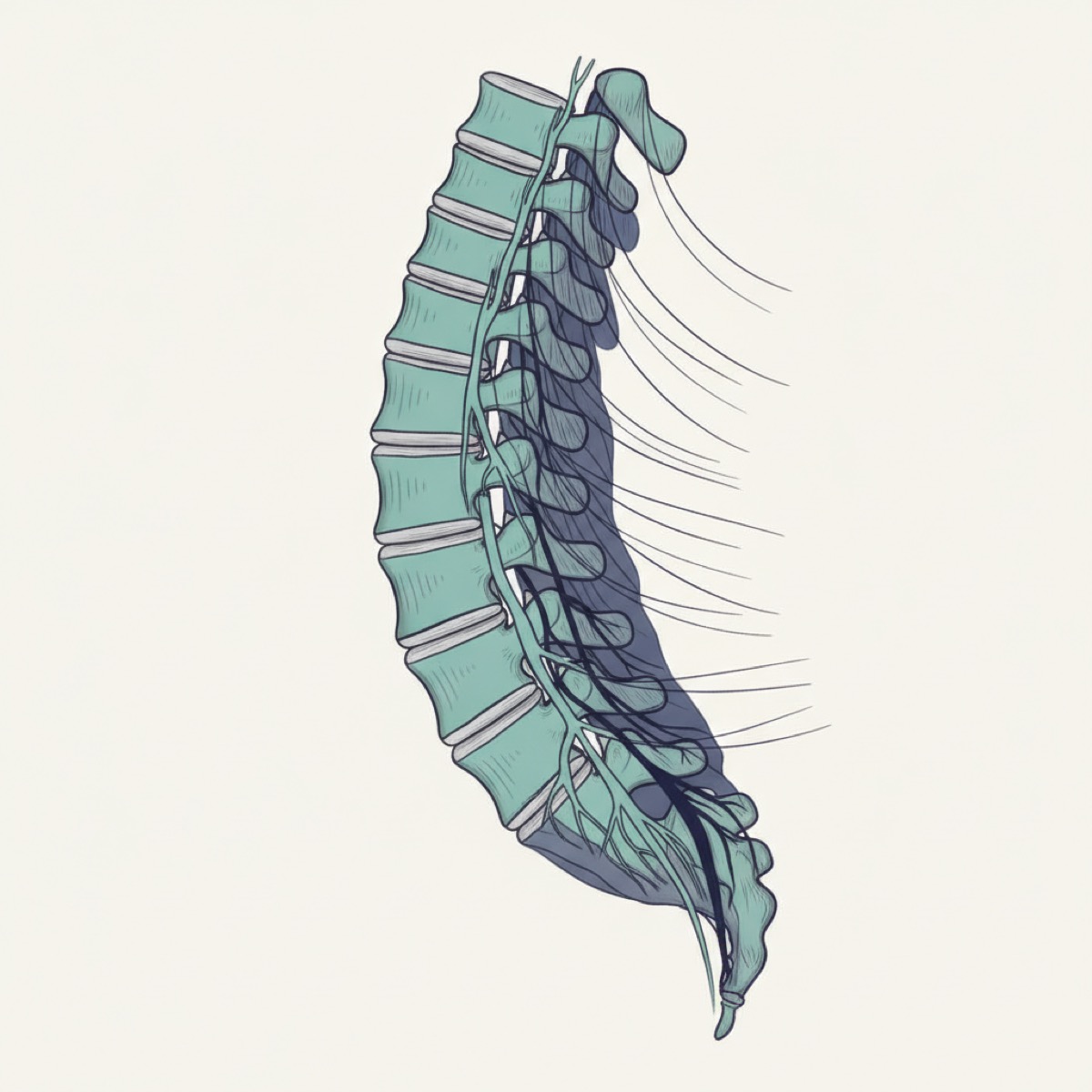
How Clinicians Identify Fascial Restrictions in Spinal Stenosis
A thorough assessment for spinal stenosis extends beyond imaging to include palpation and movement analysis. Clinicians meticulously palpate the spinous processes – the bony projections along your spine – to identify areas of stiffness, asymmetry, or restricted movement. This hands-on evaluation helps pinpoint specific segments of the spine that are not moving optimally [2].
Observing movements like forward bending (flexion) and backward arching (extension) is crucial. Pain or limitations during these actions can indicate not only direct spinal issues but also myofascial tension pulling on the spine. Interestingly, restrictions in muscles like the teres minor, latissimus dorsi, or triceps brachii, which are anatomically distant from the lumbar spine, can significantly contribute to overall spinal distortion and stiffness, influencing how the entire back moves.
Targeted Myofascial Release: A Non-Surgical Approach for Spinal Stenosis
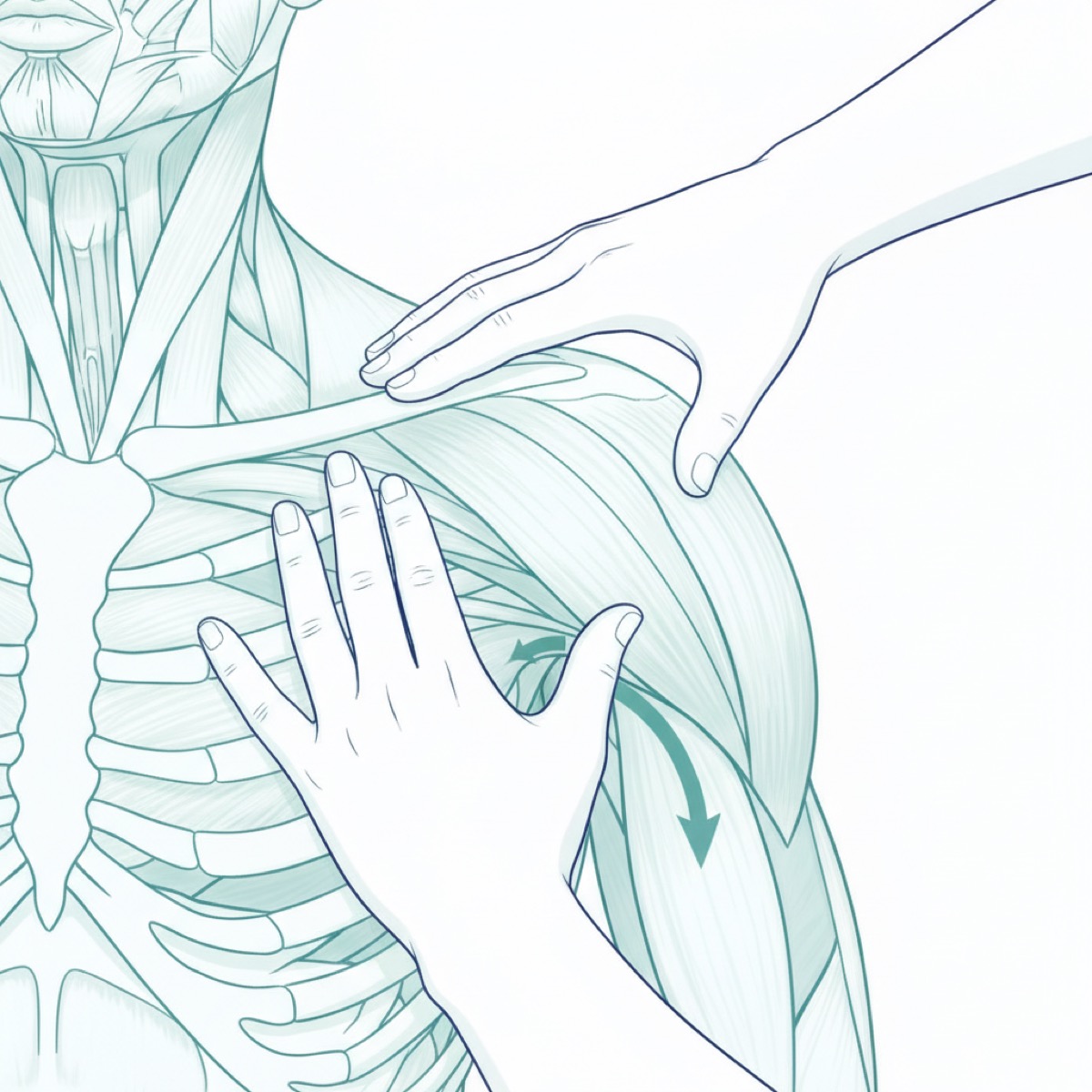
The understanding that distant myofascial restrictions can impact spinal health forms the basis of targeted fascia release techniques. One key area often addressed is the teres minor muscle, located on the outer edge of the shoulder blade. By applying precise manual pressure and movement to this area, therapists can facilitate a release in the fascia, which often results in an immediate improvement in spinal mobility and a reduction in perceived stiffness [3].
Another crucial area involves the latissimus dorsi and triceps brachii muscles, particularly where they converge around the armpit. Restrictions here can create significant tension that pulls on the thoracic and lumbar spine. Skilled practitioners use specific techniques to gently lift and release this interconnected fascial tissue, aiming to restore fluidity and reduce the compressive forces acting on the spine [4]. Patients often report a profound sense of relief and increased range of motion immediately after these targeted interventions.
Beyond the Spine: Lifestyle Factors for Lasting Relief
While targeted manual therapy is powerful, a holistic approach recognizes that overall health significantly impacts spinal stenosis. Factors like chronic neck stiffness, tension in the brain's dura mater (the protective covering of the brain and spinal cord), and even nutritional deficiencies can contribute to persistent spinal issues [5]. Addressing these broader influences is vital for sustained relief and preventing recurrence.
Lifestyle recommendations often include increasing physical activity, such as regular walking, to improve circulation and muscle strength. Ensuring adequate calcium intake and hydration supports bone and tissue health. Furthermore, managing stress, prioritizing quality sleep, and incorporating anti-inflammatory foods like celery, cucumber, and lemon can help reduce systemic inflammation and promote overall well-being, complementing the benefits of fascia release [6].

Frequently asked questions
Is fascia release safe for spinal stenosis? — Yes, when performed by a trained and experienced practitioner, fascia release is generally considered safe. It's a gentle, non-invasive technique that focuses on releasing soft tissue tension rather than forceful manipulation. Always consult with your healthcare provider to determine if it's appropriate for your specific condition.
How quickly can I expect results from fascia release? — Many individuals experience immediate improvements in pain and mobility after a targeted fascia release session, as demonstrated in the video transcript. However, the speed and extent of results can vary depending on the chronicity and severity of your condition, as well as adherence to recommended lifestyle adjustments.
Can lifestyle changes really impact spinal stenosis? — Absolutely. Lifestyle factors such as regular movement, proper nutrition, adequate hydration, and sufficient sleep play a significant role in reducing inflammation, improving tissue health, and supporting the body's natural healing processes. These changes can complement manual therapies and contribute to long-term management of spinal stenosis symptoms.
References
- [1]Ricciotti E, FitzGerald GA. Prostaglandins and inflammation. Arterioscler Thromb Vasc Biol. 2011;31(5):986–1000.
- [2]Salehi B, Venditti A, Sharifi-Rad M, et al. The therapeutic potential of apigenin. Int J Mol Sci. 2019;20(6):1305.
- [3]Field R, Pourkazemi F, Turton J, Rooney K. Dietary interventions are beneficial for patients with chronic pain: a systematic review with meta-analysis. Pain Med. 2021;22(3):694–714.
- [4]Taljanovic MS, Gimber LH, Becker GW, et al. Shear-wave elastography: basic physics and musculoskeletal applications. RadioGraphics. 2017;37(3):855–870.
- [5]Langevin HM. Connective tissue: a body-wide signaling network? Med Hypotheses. 2006;66(6):1074–1077.
- [6]Schleip R. Fascial plasticity — a new neurobiological explanation. J Bodyw Mov Ther. 2003;7(1):11–19.
Related videos

Palpation X-Ray #84 | Is the Sacrum Really a Flat Plate? It's a Wedge, Wide at the Top and Narrowing Downward — Trace Down from the Lumbar Spine and Confirm at Gluteus Maximus
0:56
Dramatic Improvement in One Session: Manual Approach to the Pelvic Girdle, with Palpation of Anatomical Landmarks and Movement Assessment Before and After (Hands-On Demo)
5:48