
The Ultimate Pelvic Method That Instantly Corrects Whole-Body Misalignment — The Truth About Pelvic Release That Erases Back Pain, Shoulder Stiffness, and Insomnia
Original title (JP): 全身の歪みを一瞬で正す“究極の骨盤メソッド”」 「腰痛も肩こりも不眠も消える――盤リリースの真実」

Supervised by
Shogo Fujii
Physiotherapist (PT) · Founder of the SHOGO FUJII® FASCIA METHOD
View profile →Clinical Article · 7 min read
Chronic low back pain and full-body misalignment often stem from a surprising central point: the pelvis. While many approaches exist, a deeper understanding of fascial connections reveals how precisely addressing pelvic alignment can unlock widespread relief. This article explores the principles of fascia release for pelvic misalignment, offering insights into how targeted techniques can restore balance and reduce discomfort throughout the body [1].
Why is the Pelvis Key to Full Body Pain Relief?
The pelvis acts as the body's central hub, a foundational structure from which numerous fascial lines and muscular chains originate and connect. When the pelvis is misaligned, this central imbalance can propagate tension and dysfunction throughout the entire musculoskeletal system, leading to pain in seemingly unrelated areas, including persistent low back pain [2]. Many conventional pelvic adjustments may offer temporary relief but often fall short because they overlook the intricate, interconnected web of fascia. By focusing on these deeper fascial connections, it's possible to achieve more profound and lasting changes, as the pelvis, being at the body's center, profoundly influences distal structures [3].
Understanding the body's structural and fascial continuity is paramount. If the central part of the body is properly adjusted, even the most distant parts will respond and move more freely. This principle suggests that effective pelvic adjustment is not merely about repositioning bones but about releasing the fascial tensions that hold them in dysfunctional patterns.
What Specific Fascial Connections Influence Pelvic Alignment?
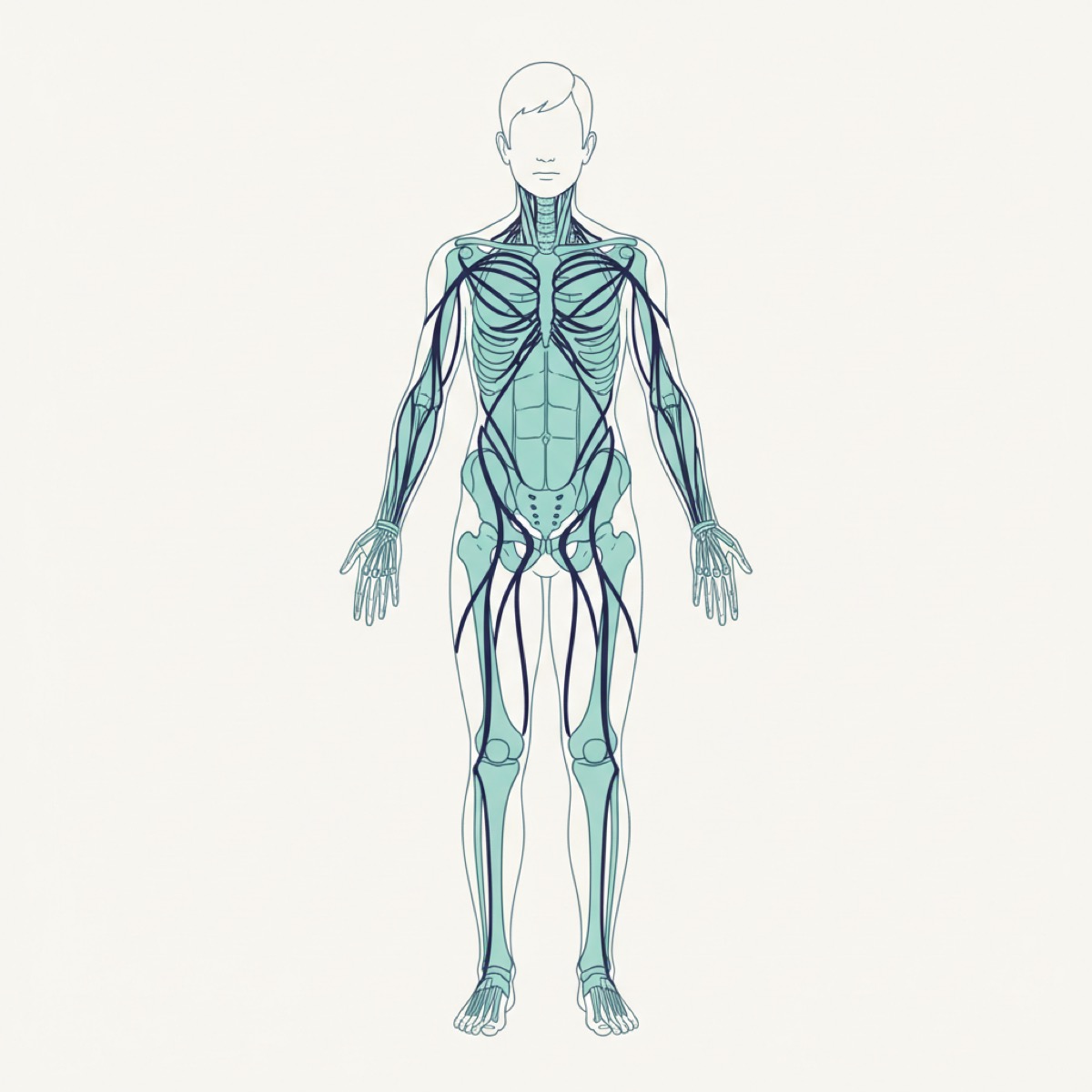
Through extensive clinical experience, specific fascial connections have been identified as crucial contributors to pelvic distortion. These connections form a 'fascial map' that guides targeted release techniques. According to this map, three primary areas are considered absolute causes of pelvic misalignment in humans, directly impacting the integrity and function of the pelvis [4].
These key areas include the Posterior Superior Iliac Spine (PSIS), a bony landmark on the pelvis; the vastus lateralis muscle, located on the outer thigh; the fibula, a bone in the lower leg; and the 'Yusen' acupressure point, found on the sole of the foot. Addressing tension and restrictions in these specific points can significantly influence pelvic stability and overall body alignment. These identified connections highlight the intricate and far-reaching influence of seemingly localized areas on the entire fascial system.
How to Address Pelvic Misalignment Through Fascia Release: The Vastus Lateralis Connection
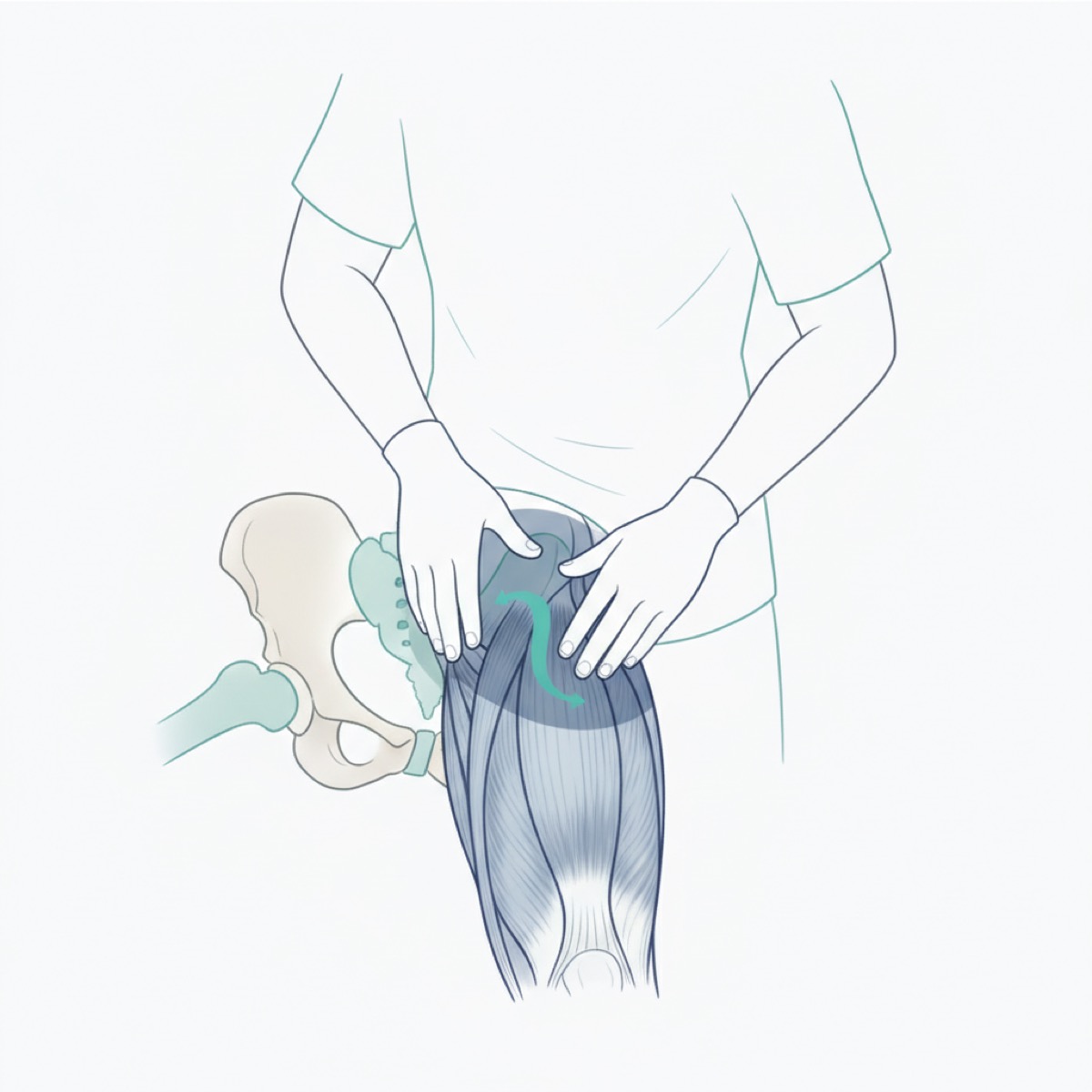
One effective technique for fascia release for pelvic misalignment involves targeting the vastus lateralis muscle in conjunction with the PSIS. To begin, locate the PSIS on the pelvis and apply gentle pressure with the base of your hand. Simultaneously, identify a 'lump' or area of significant tension within the vastus lateralis muscle on the outer thigh. Gently press into this lump and introduce a light, rhythmic oscillation or shake [5].
As the vastus lateralis is released, a distinct 'pulling' sensation may be felt at the PSIS, indicating the fascial connection is being engaged. This technique aims to induce a widespread release, often described as a 'water droplet' effect where the initial release at the vastus lateralis spreads throughout the surrounding fascial network. It's crucial to note that while these points are common, the exact location of maximum tension is individualized; therefore, careful palpation to find the specific areas of restriction is essential for effective treatment. This release can even influence facial symmetry, with observed effects like a lift in the cheekbone on the treated side.
Beyond the Thigh: Releasing the Fibula and Foot for Pelvic Stability
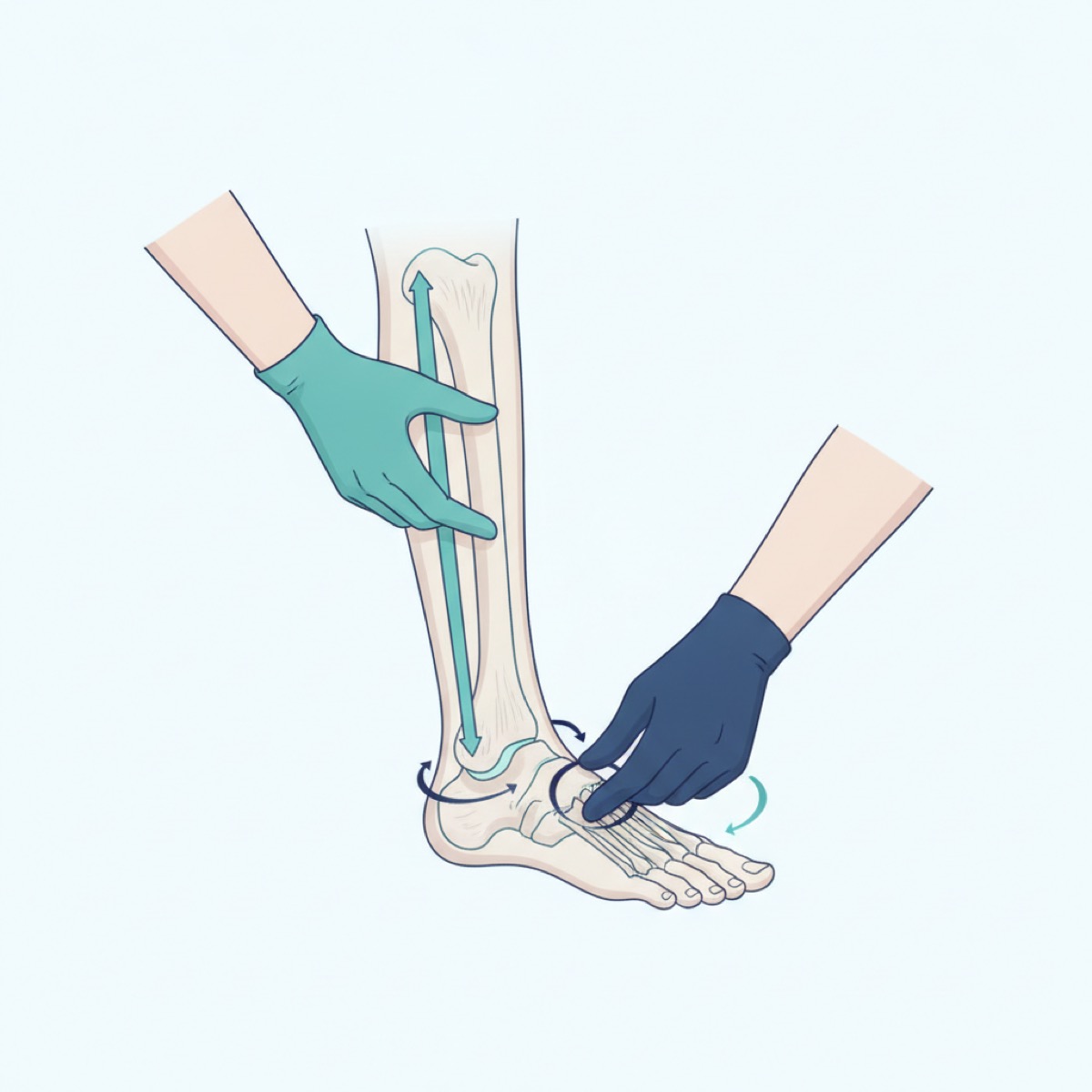
Further targeted techniques involve the fibula and the Yusen point. For the fibula, gently lift the bone upwards and apply a light, oscillatory movement. This subtle manipulation can have profound effects, often initiating a release that extends to the temporal bone and cheekbone on the ipsilateral side, as well as influencing the thoracic spine. This demonstrates the extensive fascial chains connecting the lower leg to the skull and torso [6].
The Yusen point, located in the center of the sole of the foot, is another critical area. Applying firm pressure to this point can contribute to pelvic release. Interestingly, the effectiveness of fascial release is often linked to hydration levels. The interstitial fluid, which occupies the space between fascial layers, plays a vital role in allowing these tissues to slide and release. Insufficient hydration can make fascial release more challenging, even in younger individuals.
Additionally, factors like excessive screen time, especially at night, can stiffen the dural membrane surrounding the brain. This stiffness can indirectly impede fascial release elsewhere in the body. Simple lifestyle adjustments, such as a morning walk during sunrise (5-7 AM), can naturally help release dural tension and improve overall body responsiveness to therapy.
Frequently asked questions
Is fascia release safe? — Fascia release, when performed by a trained and qualified clinician, is generally considered safe. However, like any therapeutic intervention, it's crucial to consult with a healthcare professional to determine if it's appropriate for your specific condition, especially if you have underlying medical issues or acute injuries.
How does pelvic alignment affect other body parts? — As the body's central foundation, the pelvis is intricately connected to virtually every other part of the body through a complex network of fascia, muscles, and ligaments. Misalignment here can create compensatory patterns and tension upstream (e.g., in the spine, neck, shoulders) and downstream (e.g., in the hips, knees, feet), leading to widespread pain and dysfunction. Correcting pelvic alignment can therefore have a ripple effect, improving stability and reducing pain throughout the entire system.
Can I perform fascia release on myself? — While some general self-myofascial release techniques exist (e.g., foam rolling), the specific, targeted techniques described for pelvic misalignment often require a skilled practitioner to accurately palpate, assess individual restrictions, and apply precise pressure and movement. Due to the individualized nature of fascial patterns and the need for accurate anatomical knowledge, professional guidance is highly recommended for effective and safe results.
References
- [1]Tozzi P, Bongiorno D, Vitturini C. Fascial release effects on patients with non-specific cervical or lumbar pain. J Bodyw Mov Ther. 2011;15(4):405–416.
- [2]Zügel M, Maganaris CN, Wilke J, et al. Fascial tissue research in sports medicine: from molecules to tissue adaptation, injury and diagnostics: consensus statement. Br J Sports Med. 2018;52(23):1497.
- [3]Klingler W, Velders M, Hoppe K, Pedro M, Schleip R. Clinical relevance of fascial tissue and dysfunctions. Curr Pain Headache Rep. 2014;18(8):439.
- [4]Wilke J, Vogt L, Niederer D, Banzer W. Is remote stretching based on myofascial chains as effective as local exercise? A randomised-controlled trial. J Sports Sci. 2017;35(20):2021–2027.
- [5]Palomeque-del-Cerro L, Arráez-Aybar LA, Rodríguez-Blanco C, et al. A systematic review of the soft-tissue connections between neck muscles and dura mater: the myodural bridge. Spine. 2017;42(1):49–54.
- [6]Woolf CJ. Central sensitization: implications for the diagnosis and treatment of pain. Pain. 2011;152(3 Suppl):S2–S15.
Related videos

Palpation X-Ray #84 | Is the Sacrum Really a Flat Plate? It's a Wedge, Wide at the Top and Narrowing Downward — Trace Down from the Lumbar Spine and Confirm at Gluteus Maximus
0:56
Dramatic Improvement in One Session: Manual Approach to the Pelvic Girdle, with Palpation of Anatomical Landmarks and Movement Assessment Before and After (Hands-On Demo)
5:48