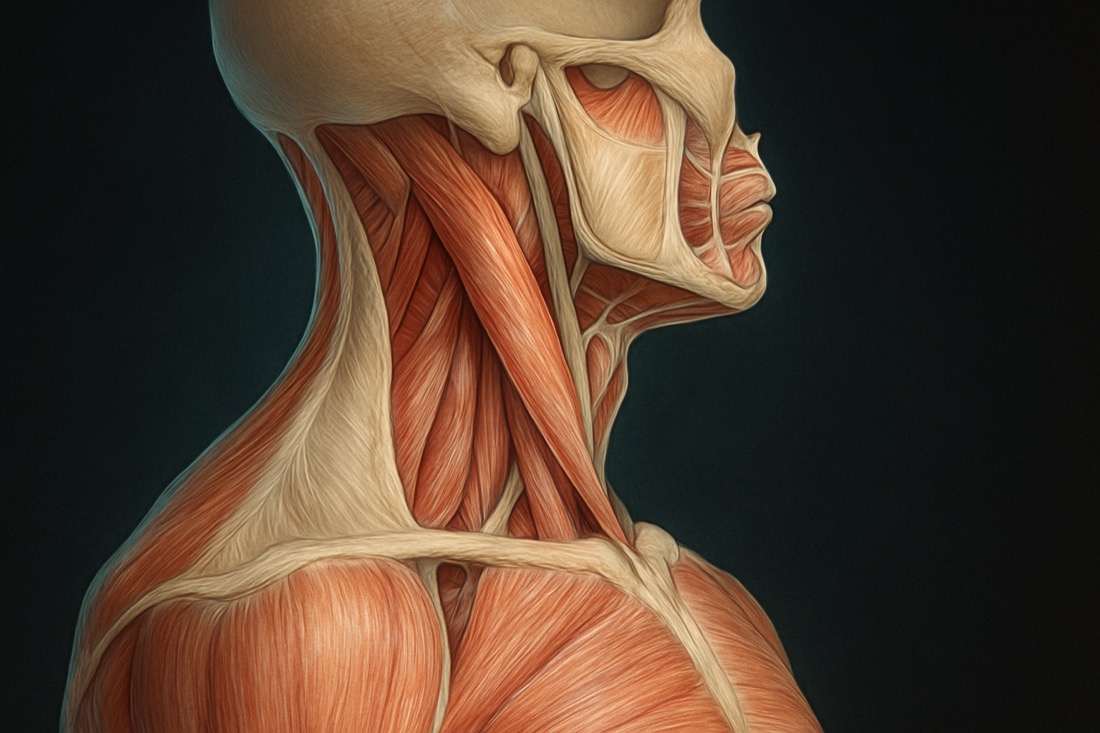
3 Simple Steps to Fix Elbow Pain at the Structural Level
Original title (JP): 「肘の痛み」を“構造”から解決する、たった3つのステップ

Supervised by
Shogo Fujii
Physiotherapist (PT) · Founder of the SHOGO FUJII® FASCIA METHOD
View profile →Clinical Article · 6 min read
If you are searching for elbow pain fascia release, the most useful idea is that the elbow is often where a problem shows up, not where it starts. In this video, physiotherapist Shogo Fujii describes a three-step structural approach: learn the map of fascial connections, assess by reproducing the pain and re-testing, then release the stiff regions that the movement pattern points to. This article restructures those teachings for clinicians and informed patients. It is educational, not medical advice, and it does not promise any particular result [1][2].
Why does elbow pain involve more than the elbow? Elbow pain fascia release in context
Fujii starts with a principle: before you work on any painful spot, you need a map of how the body connects. Fascia is a continuous network of connective tissue that wraps muscle, tendon and joint. Force and tension travel along it, so a restriction in one area can change loading somewhere else [1][2].
He contrasts this with the usual approach of treating only the sore point. Tendon pain at the elbow is a good example. In his demonstration, the elbow tendon and the soft tissue of the trunk and shoulder region respond together. A stiff armpit-side region, for example, can limit how freely the arm moves overhead. The elbow may then take up the slack.
This is a clinical way of thinking, not a proven mechanism for every patient. Research on fascial chains is still developing, and reviews describe the evidence for strict anatomical 'trains' as mixed [3]. The map is best used as a hypothesis generator. It tells you where to look, and then testing shows whether it was right.
Step 1: What is the fascial map, and why learn it first?
Fujii says the first step is to know the connection map before touching anything. He notes that many people learn pain patterns from books or from video demonstrations of techniques. He says that is not enough, because a technique copied from a video does not tell you why that spot matters for this person.
His examples of connected regions include the lower back and thoracolumbar area, the front of the chest, the lateral side of the armpit, and the hamstrings. He also points to continuity between the left and right sides of the body. When one region is 'glued down', its neighbours often move differently to compensate.
In practice, the map answers one question: which tight areas could plausibly be loading this elbow? That keeps the session focused on a few reasoned candidates instead of working on everything.
Step 2: How do you assess elbow pain before treating it?
The second step is assessment, and Fujii treats it as the core of the work. He first listens to the person's history. He then asks them to move in the way that provokes the pain, such as lifting the arm, turning, or reaching, and notes exactly where and when it appears.
Next he presses or gently loads suspected areas and has the person repeat the same movement. If the pain pattern changes, for example if it starts later, feels smaller, or the arm reaches further, that region is probably relevant. If nothing changes, he moves on. In the video he checks several areas this way, including the lower back, the front of the chest and the side of the armpit.
This is the standard test-treat-retest logic used in manual therapy. Its value is that it relies on the person's own response rather than on assumptions. Pain is also influenced by context, expectation and attention, so a change in a single session should be read as a useful clue and not as proof of a fix [4][5].
Step 3: How does fascia release work on the areas that matter?
Once the relevant regions are identified, the third step is release. Fujii's emphasis is that it is not a fixed recipe such as 'press here ten times'. He compares it to a craftsperson's feel. Over years of practice he has learned how tissue changes under the hand, and the aim is to reproduce that feel each time instead of following a count or a shape.
In the demonstration, the main target is the lateral side of the armpit, where he describes tissue that feels stuck. He applies slow, sustained contact there while the person lifts and lowers the arm, then checks again how far the hand reaches and where the pain shows up. He also mentions the hamstrings as a heavily tightened area that can be addressed with stretching, in his words a 'master key' region that is often stiff.
Mechanistically, manual fascial work is thought to act partly through the nervous system, through changes in sensation, tone and perceived stiffness, and not only by physically 'breaking up' tissue [2][6]. The effects reported in studies are usually modest and short-term, so release is best combined with movement and load management.
Frequently asked questions
Is fascia release safe for elbow pain? — For most people, gentle to moderate manual work is well tolerated, but it should be adapted to the person. Avoid it, or get a medical assessment first, if there is significant swelling, numbness, weakness, a recent injury or fracture, or pain that does not change with movement. Soreness for a day or so afterwards is common [2].
Why work on the armpit, back or hamstrings if the pain is in the elbow? — Because the structural approach treats the elbow as part of a connected system. A stiff region elsewhere can change how the arm moves and how the elbow is loaded. The assess-and-retest step in this video checks whether a given area actually matters for you, so the answer differs from person to person [1][3].
How quickly will I notice a difference? — Some people notice a change in pain or range of motion within a session, as Fujii shows, but that varies and may not last. Chronic or long-standing pain usually needs repeated sessions, movement retraining and sometimes a medical or physiotherapy evaluation. No approach can guarantee an outcome [4][5].
References
- [1]Ricciotti E, FitzGerald GA. Prostaglandins and inflammation. Arterioscler Thromb Vasc Biol. 2011;31(5):986–1000.
- [2]Salehi B, Venditti A, Sharifi-Rad M, et al. The therapeutic potential of apigenin. Int J Mol Sci. 2019;20(6):1305.
- [3]Field R, Pourkazemi F, Turton J, Rooney K. Dietary interventions are beneficial for patients with chronic pain: a systematic review with meta-analysis. Pain Med. 2021;22(3):694–714.
- [4]Taljanovic MS, Gimber LH, Becker GW, et al. Shear-wave elastography: basic physics and musculoskeletal applications. RadioGraphics. 2017;37(3):855–870.
- [5]Langevin HM. Connective tissue: a body-wide signaling network? Med Hypotheses. 2006;66(6):1074–1077.
- [6]Schleip R. Fascial plasticity — a new neurobiological explanation. J Bodyw Mov Ther. 2003;7(1):11–19.
Related videos
Palpation X-Ray #84 | Is the Sacrum Really a Flat Plate? It's a Wedge, Wide at the Top and Narrowing Downward — Trace Down from the Lumbar Spine and Confirm at Gluteus Maximus
0:56
Dramatic Improvement in One Session: Manual Approach to the Pelvic Girdle, with Palpation of Anatomical Landmarks and Movement Assessment Before and After (Hands-On Demo)
5:48