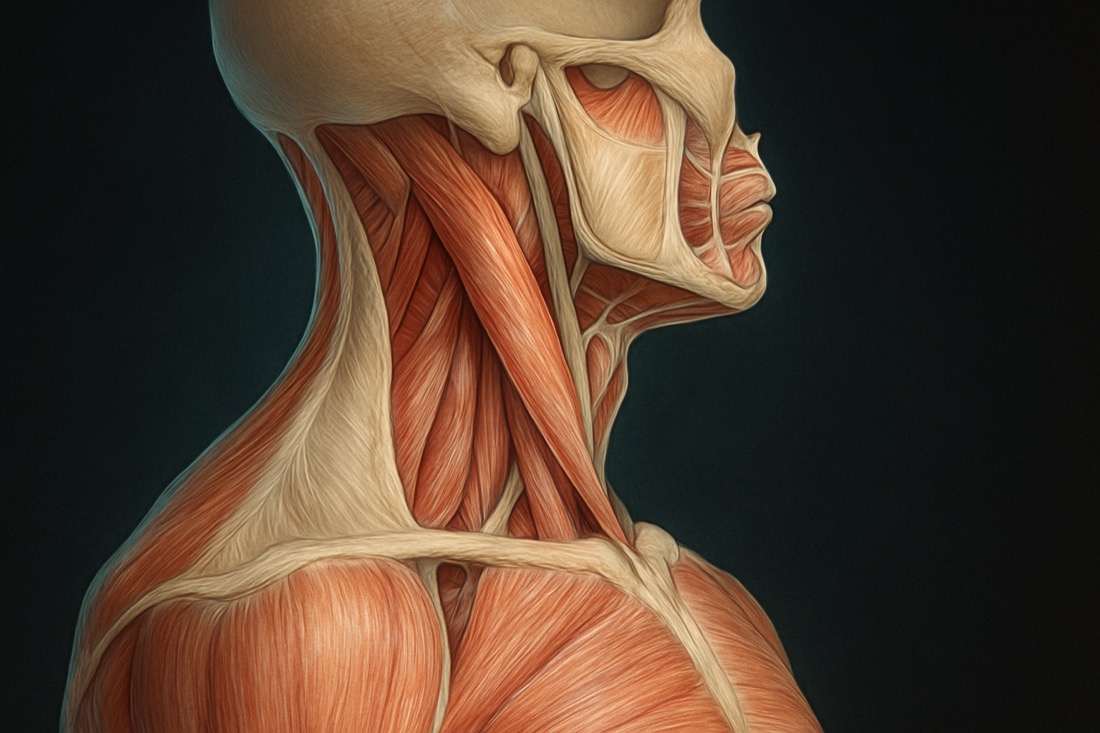
The Magic Fascia Release That Slims Your Face with a Spinal Technique
Original title (JP): 脊柱テクニックで小顔にする魔法の筋膜リリース

Supervised by
Shogo Fujii
Physiotherapist (PT) · Founder of the SHOGO FUJII® FASCIA METHOD
View profile →Clinical Article · 7 min read
Fascia release for a slimmer face sounds like a beauty trick, but the idea behind it is anatomical: the face does not sit in isolation, and tension in the spine, shoulder blade and armpit region may change how the neck, jaw and facial tissues are held. In a recent clinic demonstration, Japanese physical therapist Shogo Fujii treated the back and armpit muscles first, then rechecked the client's facial line. This article explains the reasoning, the hands-on steps shown, and what the evidence can and cannot support. It is educational, not medical advice, and results vary from person to person.
Can fascia release for a slimmer face start in the back?
Fujii's central claim is that facial asymmetry or heaviness along the jawline is rarely only a facial problem. He links it to a chain of restrictions running from the pelvis, up through the spine, and into the shoulder girdle and armpit. In his words, the pelvis is the foundation, and the spine is the "main pillar" of a house: once the pillar is straightened, the rest of the structure can settle.
This fits a broader fascial-continuity idea. Connective tissue forms linked sheets across the trunk, and the thoracolumbar fascia ties the low back to the latissimus dorsi and the shoulder region [1][2]. Reviews of myofascial chains suggest that load and stiffness can transmit between neighbouring regions, although how far this reaches, and whether it reaches the face, is still debated [3].
So the practical takeaway is a hypothesis, not a proven mechanism: if the trunk and armpit are heavily restricted, the neck and face may be pulled into a compensating posture. Treating the back first is a way of testing that idea in the clinic.
Which muscles are involved in spine tension and a heavy face line?
Fujii names three muscles he sees as common contributors to spinal strain: the teres major (the muscle along the outer edge of the shoulder blade), the latissimus dorsi (the broad back muscle that forms the back wall of the armpit), and the long head of the triceps. All three cross the armpit region and attach near or onto the shoulder blade, so overuse can pull the scapula and, by extension, the thoracic spine out of balance.
In the demonstration, the client was a busy parent who also did a lot of manual work. Her latissimus dorsi felt inflamed and sore, and the spinal ridge showed a stiff, abrupt segment where the normal smooth continuity of the bones seemed interrupted. That is a palpation impression, not an imaging finding, and it should be read as one clinician's observation.
A reasonable evidence-informed view is that repetitive overhead or carrying work can raise tone in these muscles and limit shoulder and thoracic mobility [4]. Whether that also changes the appearance of the face is plausible but not established by controlled studies.
How to do fascia release for the spine and armpit: the steps shown
Step one is assessment. Feel the spinous processes, the bony ridge down the middle of the back that Fujii compares to a dinosaur's spine, then press gently sideways along it. Compare levels and look for a shared hard spot. In the video, the stiffest area sat in the thoracic region, and participants were asked to confirm the same area on their own partners before treating it.
Step two targets the teres muscles. Locate the lateral border of the shoulder blade, press into the firm, tender band until you feel the tissue "catch," then make small circular or slow stripping movements. Step three is the latissimus dorsi: switch hands, reach into the deeper tissue at the back of the armpit, lift it, and let it move as the client breathes or shifts. Repeat several times rather than forcing one deep pass.
Pressure should stay within the client's tolerance. Fujii noted that the area was very painful in this case, which is a reason to slow down, not push harder. Afterward he rechecked the pelvis, the back and the facial line, and only then moved to his usual facial work. Use the same principle at home: ease in, breathe, and stop if pain is sharp or radiating.
What changes can you expect, and what does the evidence say?
In the video, the client reported softer tissue, a lighter feeling and a visibly sharper jawline and cheek contour on one treated side, and the pelvis also seemed to move more freely on re-palpation. Fujii attributed this to releasing adhesions that were pulling on the face from the armpit. These are immediate, subjective and visual impressions from a single demonstration, and they may also reflect relaxation, fluid shifts, posture changes or camera angle.
Research on manual and self-myofascial techniques shows short-term gains in range of motion and perceived tightness, with small and variable effects on pain [5]. Evidence for lasting changes in facial shape is lacking, so it is wise to treat any contour change as temporary until it has been tracked over weeks.
Fujii also suggests that releasing the trunk first may make the usual facial work more effective and shorten the time it takes. That is a clinical impression worth testing, for example by taking standardized front and side photos before and after, but it is not a guaranteed outcome.
Frequently asked questions
Is fascia release for a slimmer face safe? — For most healthy adults, gentle to moderate pressure is generally well tolerated, with temporary soreness being the most common effect [5]. Avoid it over acute injuries, infections, blood clots, or unexplained lumps, and see a clinician first if you have osteoporosis, are on blood thinners, or have numbness or radiating pain.
Does releasing the back and armpit really change the face? — It may, in the short term, through changes in posture, tissue tone and relaxation, and some clinicians report visible changes in the jaw and cheek line [3][6]. However, controlled evidence is limited, so treat it as a promising idea rather than a proven result, and expect individual differences.
How often should I do it, and can I do it myself? — A light self-release of the shoulder blade edge and armpit with a ball or your fingers a few times a week is a reasonable starting point, ideally paired with posture and mobility work [4]. Deeper work on the spine or on painful, inflamed areas is better done with a trained physical therapist who can assess the whole chain.
References
- [1]Tracey KJ. The inflammatory reflex. Nature. 2002;420(6917):853–859.
- [2]Mayer EA. Gut feelings: the emerging biology of gut–brain communication. Nat Rev Neurosci. 2011;12(8):453–466.
- [3]Cryan JF, Dinan TG. Mind-altering microorganisms: the impact of the gut microbiota on brain and behaviour. Nat Rev Neurosci. 2012;13(10):701–712.
- [4]Guo R, Chen LH, Xing C, Liu T. Pain regulation by gut microbiota: molecular mechanisms and therapeutic potential. Br J Anaesth. 2019;123(5):637–654.
- [5]Ricciotti E, FitzGerald GA. Prostaglandins and inflammation. Arterioscler Thromb Vasc Biol. 2011;31(5):986–1000.
- [6]Salehi B, Venditti A, Sharifi-Rad M, et al. The therapeutic potential of apigenin. Int J Mol Sci. 2019;20(6):1305.
Related videos
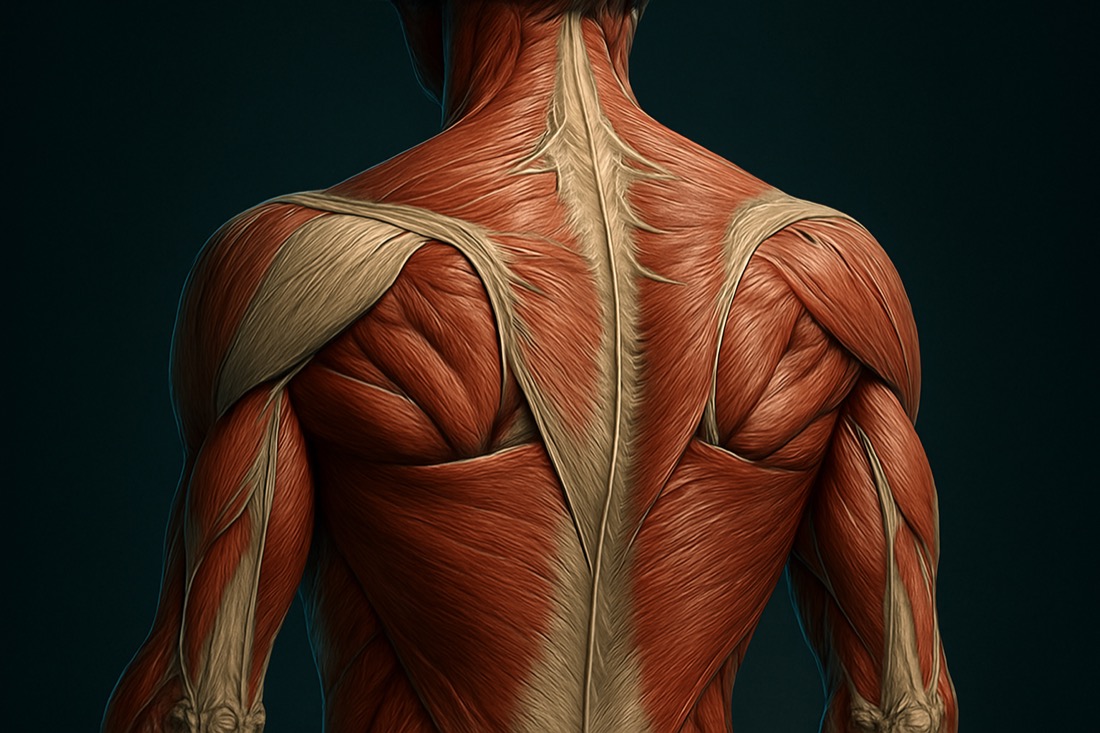
Palpation X-Ray #84 | Is the Sacrum Really a Flat Plate? It's a Wedge, Wide at the Top and Narrowing Downward — Trace Down from the Lumbar Spine and Confirm at Gluteus Maximus
0:56
Dramatic Improvement in One Session: Manual Approach to the Pelvic Girdle, with Palpation of Anatomical Landmarks and Movement Assessment Before and After (Hands-On Demo)
5:48