Sternocleidomastoid Release: Treating Headaches, Lower Back Pain, and Shoulder Stiffness with C1, Explained Through Functional Anatomy
Original title (JP): 【胸鎖乳突筋リリース】機能解剖学からC1を使った頭痛,腰痛,肩こり治療を披露します!

Supervised by
Shogo Fujii
Physiotherapist (PT) · Founder of the SHOGO FUJII® FASCIA METHOD
View profile →Clinical Article · 7 min read
The sternocleidomastoid (SCM) muscle, a prominent neck muscle, might seem an unlikely culprit for distant pain, yet its deep fascial connections can surprisingly contribute to issues like headaches, shoulder tension, and even **low back pain**. This article explores the intricate role of the SCM in musculoskeletal dysfunction and introduces a specialized **sternocleidomastoid release for low back pain** approach, focusing on its connection to the C1 vertebra to unlock widespread therapeutic benefits. Understanding this muscle's impact can open new avenues for comprehensive pain relief and improved body function.
Why Does SCM Tension Contribute to Low Back Pain?
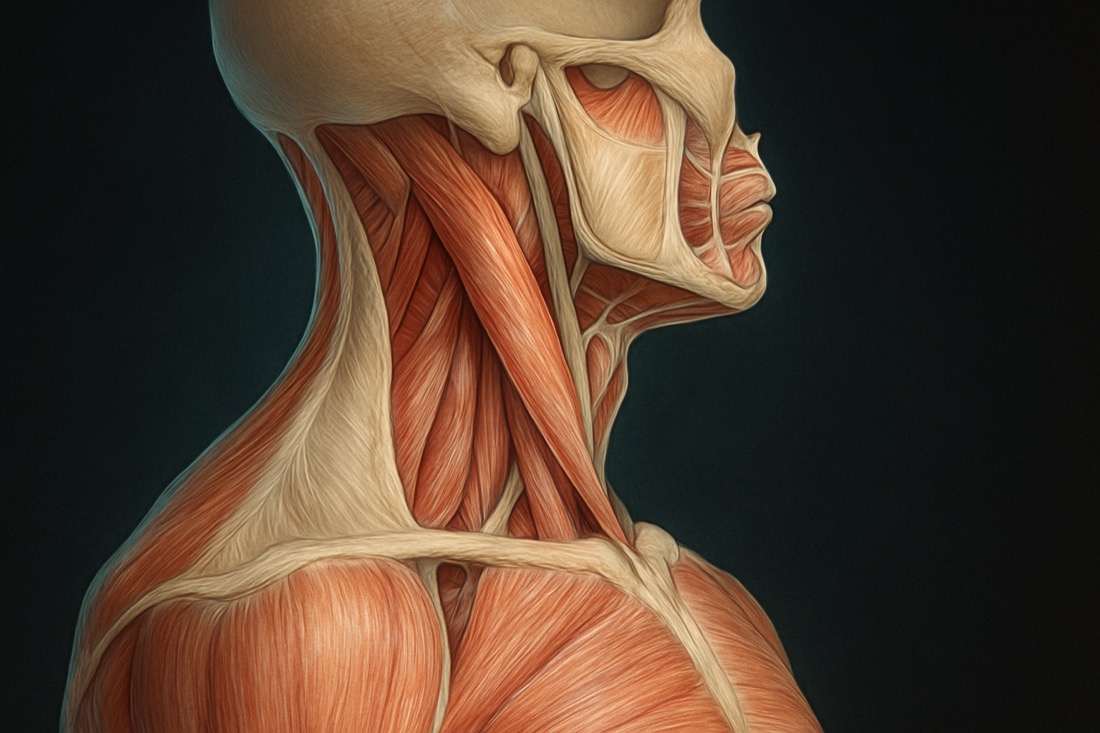
The sternocleidomastoid (SCM) is a powerful muscle of the neck, originating from two heads: the sternal head from the manubrium of the sternum, and the clavicular head from the medial third of the clavicle. Both heads converge to insert onto the mastoid process of the temporal bone and the lateral part of the superior nuchal line of the occipital bone. Innervated primarily by the accessory nerve (CN XI) and branches from cervical nerves C2-C3, the SCM plays a crucial role in neck flexion, lateral flexion, and contralateral rotation of the head and neck [1].
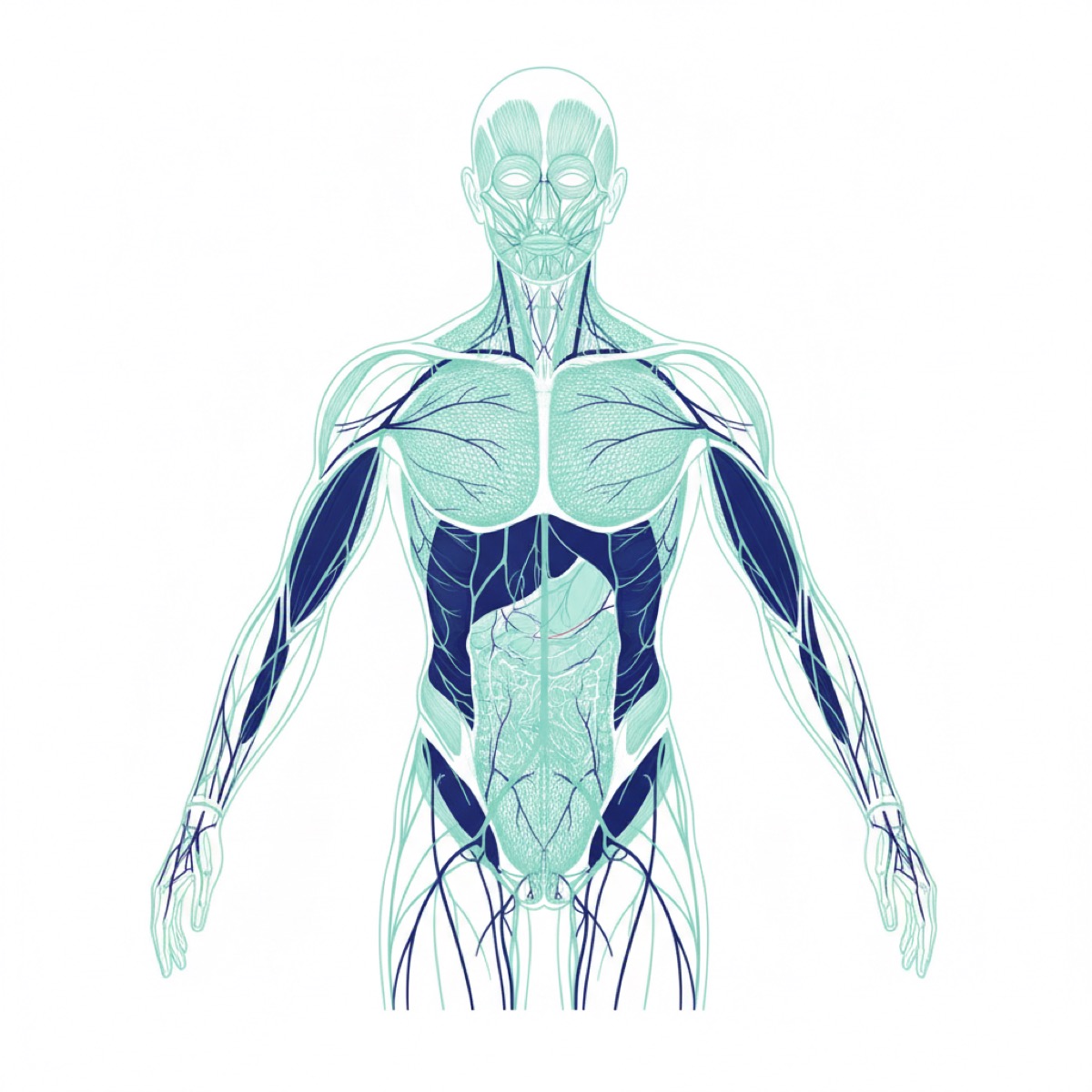
Beyond its direct actions, the SCM's deep fascial connections extend throughout the body. When this muscle becomes tight or develops trigger points, it can create a cascade of tension that impacts structures far removed from the neck. This includes influencing the position and movement of the skull, jaw, and even the thoracic cage. Given the body's interconnected fascial network, dysfunction in the SCM can transmit stress and alter biomechanics down the kinetic chain, contributing to seemingly unrelated issues like **sternocleidomastoid release for low back pain** scenarios [2].
The Sternocleidomastoid's Far-Reaching Fascial Connections
Clinically, SCM dysfunction is frequently implicated in a wide array of symptoms. Localized tension can lead to chronic headaches, particularly tension-type headaches, and neck stiffness. Its proximity to the temporomandibular joint (TMJ) and connections to the cranium mean SCM tightness can contribute to jaw pain, bruxism (teeth grinding), and even facial asymmetry [3]. Furthermore, entrapment or irritation of surrounding neurovascular structures by a tight SCM can manifest as hand paresthesia or altered blood flow to the head.
A less obvious but significant connection is the SCM's role in whole-body posture and stability. Its fascial continuity with other anterior trunk muscles, such as the pectoralis major and sternalis, means that tension in the SCM can pull on the sternum and ribs, affecting breathing mechanics and thoracic spine mobility. This chain reaction can alter pelvic alignment and subsequently contribute to chronic low back pain. The bifurcation point where the sternal and clavicular heads meet is often a key area for fascial adhesions and trigger point development, making it a critical focus for therapeutic intervention [4].
Palpating the SCM: Finding the Key Release Points
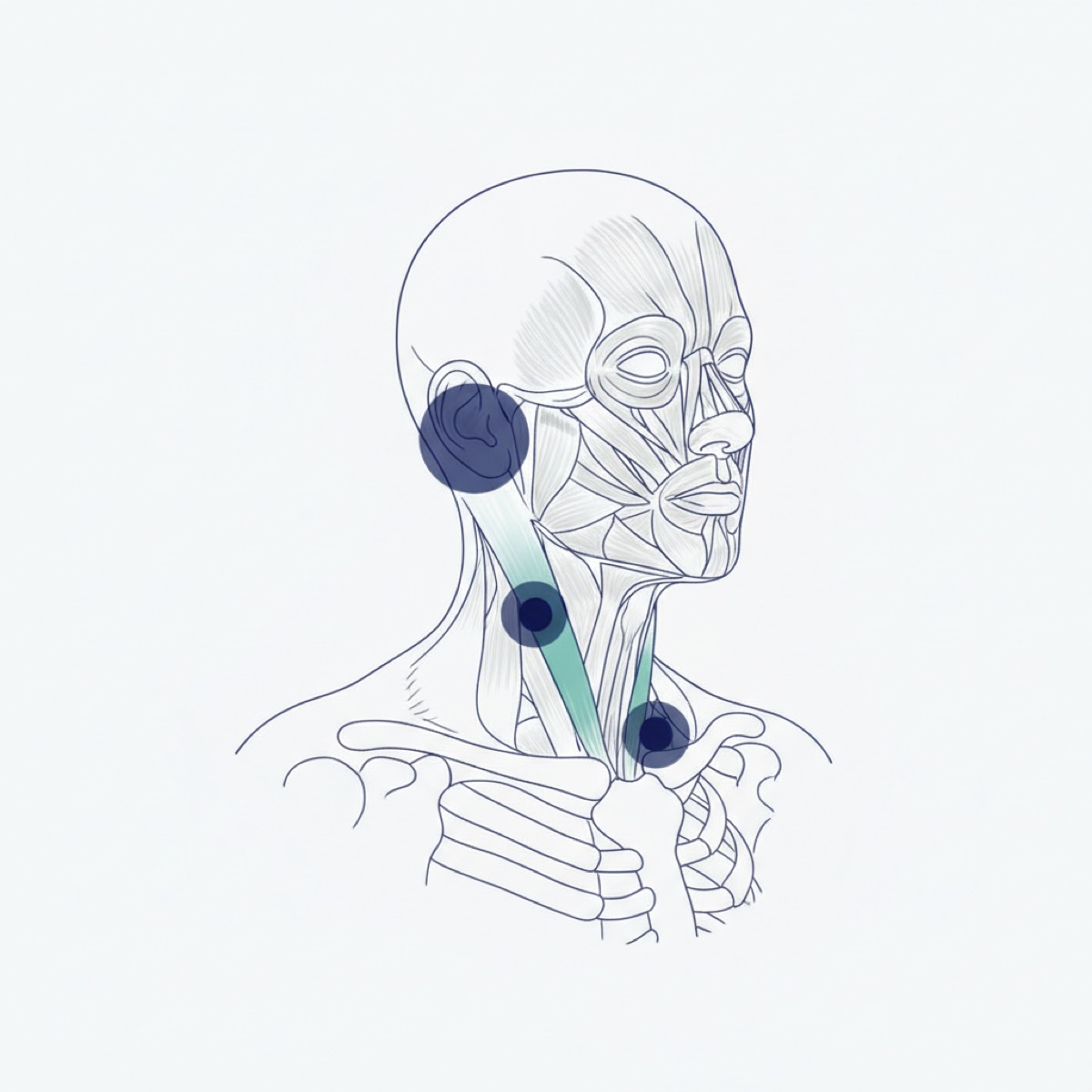
Effective SCM release begins with precise palpation. To locate the SCM, start by identifying the mastoid process, the bony prominence directly behind your ear. From this insertion point, gently trace the muscle downwards towards the anterior neck. You will feel two distinct bellies: the more superficial sternal head and the deeper, often broader, clavicular head.
The most clinically significant area for palpation and release is often the junction or bifurcation point where these two heads meet, typically in the mid-neck region. This area is prone to developing significant tightness and adhesions. When palpating, be mindful of underlying neurovascular structures and use gentle, sustained pressure. Identifying areas of tenderness or palpable taut bands indicates potential fascial restriction that requires attention [5].
A C1-Focused SCM Release Technique for Systemic Relief
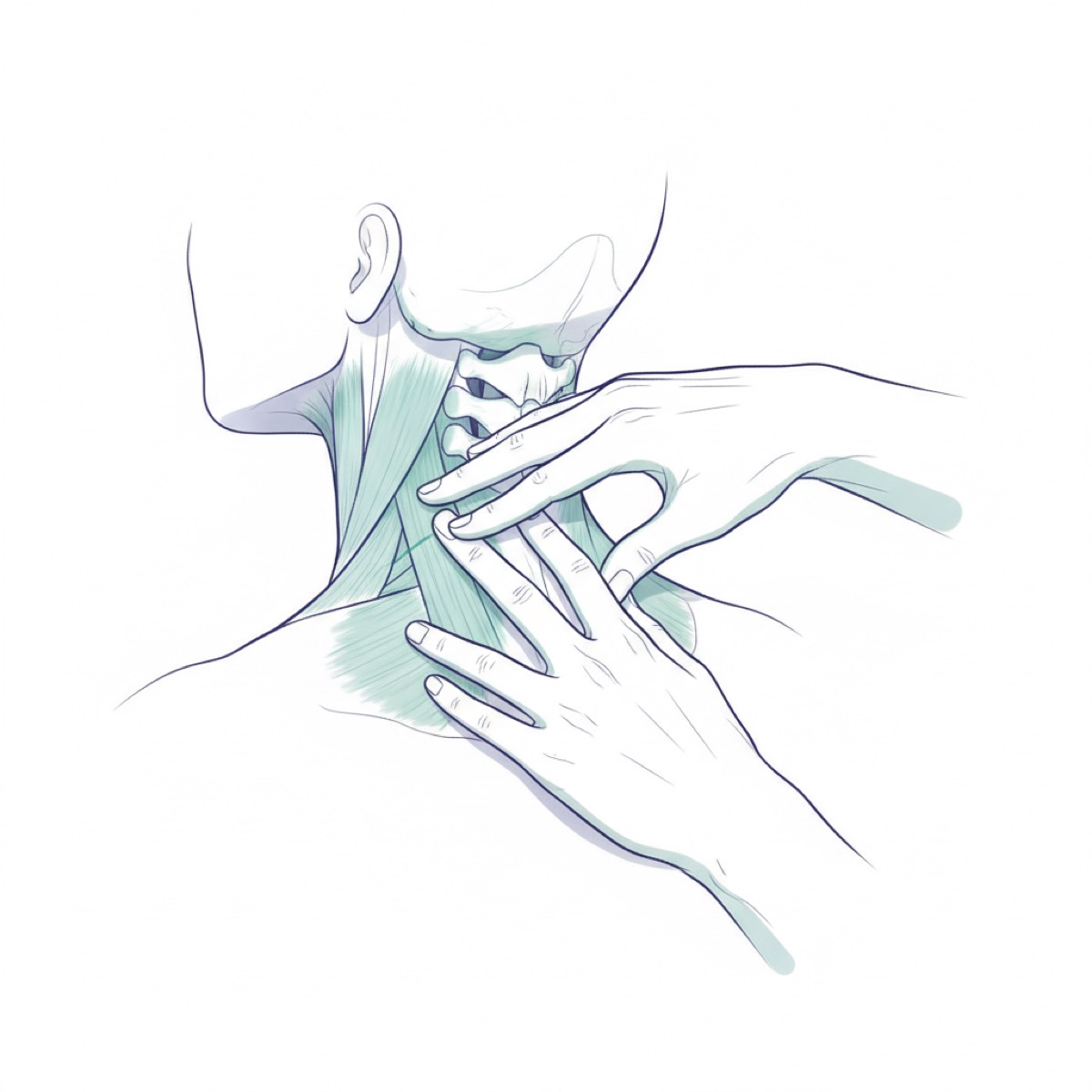
A powerful approach to SCM release involves integrating it with mobilization of the C1 (atlas) vertebra, given their direct anatomical and functional relationship. While the SCM doesn't directly attach to C1, its influence on head posture and cervical mechanics profoundly affects C1 alignment and mobility. A specific technique targets the SCM's bifurcation point in conjunction with subtle C1 mobilization.
The technique involves carefully palpating the C1 transverse process (often just below the mastoid process) while simultaneously applying gentle, sustained pressure and traction to the SCM's bifurcation. As the SCM is gently released, subtle movements of the head and neck can be introduced to encourage C1 mobility. This combined approach aims to release deep fascial restrictions within the SCM while optimizing the alignment and function of the upper cervical spine. Patients often report immediate improvements in neck rotation, reduced headaches, and surprisingly, enhanced mobility in distant areas like the shoulders, hips, and even calves, underscoring the profound systemic impact of this targeted release [6].
Frequently asked questions
Is SCM release safe? — SCM release, when performed by a trained and experienced clinician, is generally considered safe. However, due to the proximity of vital neurovascular structures in the neck, it should not be attempted without proper guidance and anatomical knowledge. Always consult a healthcare professional for assessment and treatment.
How quickly can I expect results from SCM release? — The speed and extent of results can vary significantly among individuals. Some patients may experience immediate relief and improved range of motion after a single session, while others with chronic or complex conditions may require several sessions to achieve lasting changes. Consistency and adherence to any recommended home exercises are often key.
Can SCM tension truly affect my low back? — Yes, through the body's intricate myofascial chains, tension in the SCM can indeed influence the low back. Fascia connects muscles, bones, and organs throughout the body, meaning that restrictions in one area, such as the SCM, can transmit tension and alter biomechanics in distant regions, including the pelvis and lumbar spine, contributing to pain or dysfunction.
References
- [1]Tozzi P, Bongiorno D, Vitturini C. Fascial release effects on patients with non-specific cervical or lumbar pain. J Bodyw Mov Ther. 2011;15(4):405–416.
- [2]Zügel M, Maganaris CN, Wilke J, et al. Fascial tissue research in sports medicine: from molecules to tissue adaptation, injury and diagnostics: consensus statement. Br J Sports Med. 2018;52(23):1497.
- [3]Klingler W, Velders M, Hoppe K, Pedro M, Schleip R. Clinical relevance of fascial tissue and dysfunctions. Curr Pain Headache Rep. 2014;18(8):439.
- [4]Wilke J, Vogt L, Niederer D, Banzer W. Is remote stretching based on myofascial chains as effective as local exercise? A randomised-controlled trial. J Sports Sci. 2017;35(20):2021–2027.
- [5]Palomeque-del-Cerro L, Arráez-Aybar LA, Rodríguez-Blanco C, et al. A systematic review of the soft-tissue connections between neck muscles and dura mater: the myodural bridge. Spine. 2017;42(1):49–54.
- [6]Woolf CJ. Central sensitization: implications for the diagnosis and treatment of pain. Pain. 2011;152(3 Suppl):S2–S15.
Related videos
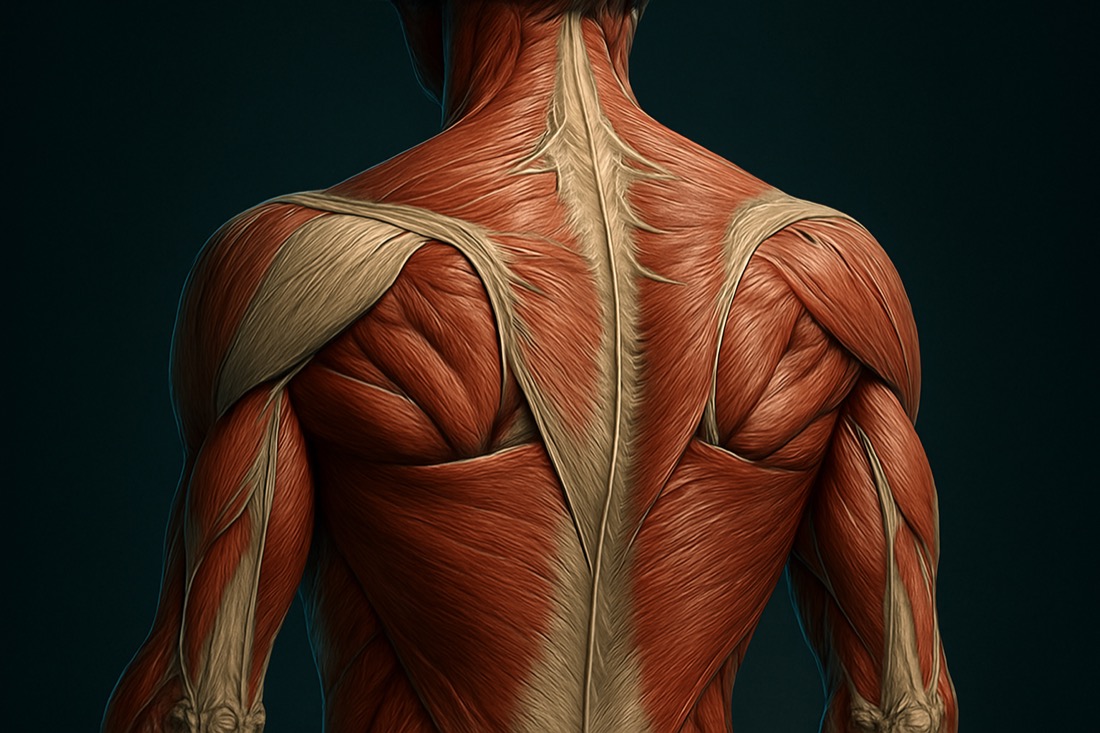
Palpation X-Ray #84 | Is the Sacrum Really a Flat Plate? It's a Wedge, Wide at the Top and Narrowing Downward — Trace Down from the Lumbar Spine and Confirm at Gluteus Maximus
0:56
Dramatic Improvement in One Session: Manual Approach to the Pelvic Girdle, with Palpation of Anatomical Landmarks and Movement Assessment Before and After (Hands-On Demo)
5:48