
Godly Technique: Instantly Slim Your Face with Occipital Bone Release
Original title (JP): 【神テクニック】一瞬で小顔になる!後頭骨リリース

Supervised by
Shogo Fujii
Physiotherapist (PT) · Founder of the SHOGO FUJII® FASCIA METHOD
View profile →Clinical Article · 8 min read
Many individuals seek non-invasive methods to improve facial symmetry, reduce tension, and achieve a sense of lightness in the head. One such approach gaining attention in fascia therapy is **occipital bone release for facial contouring**. This gentle technique focuses on restoring optimal positioning and mobility to the occipital bone at the base of the skull, which practitioners believe can have profound effects not only on cranial comfort but also on the overall aesthetic balance of the face. By addressing subtle shifts in cranial structures, this therapy aims to unlock a more harmonious and relaxed presentation.
What is Occipital Bone Release and How Can It Impact Facial Contouring?
The occipital bone, located at the back and lower part of the skull, plays a crucial role in supporting the head and connecting to various fascial lines that extend throughout the body [1]. In fascia therapy, it's understood that imbalances or restrictions in this bone's position can contribute to a range of symptoms, including feelings of head heaviness or perceived facial asymmetry. A key theory suggests that the occipital bone can subtly "spread" or widen laterally over time, leading to a less compact and potentially more "square" appearance of the head, rather than its natural rounded form.
**Occipital bone release for facial contouring** is a specialized technique designed to gently guide the occipital bone back towards a more optimal, inward alignment. Practitioners observe that when this subtle correction occurs, clients often report a remarkable sense of lightness in their head, improved clarity of vision, and a noticeable softening or "slimming" effect on the face [2]. This isn't about dramatic structural change but rather enhancing the natural contours and easing fascial tension that might contribute to a less refined facial presentation. The goal is to restore balance, promoting both comfort and a more harmonious appearance.
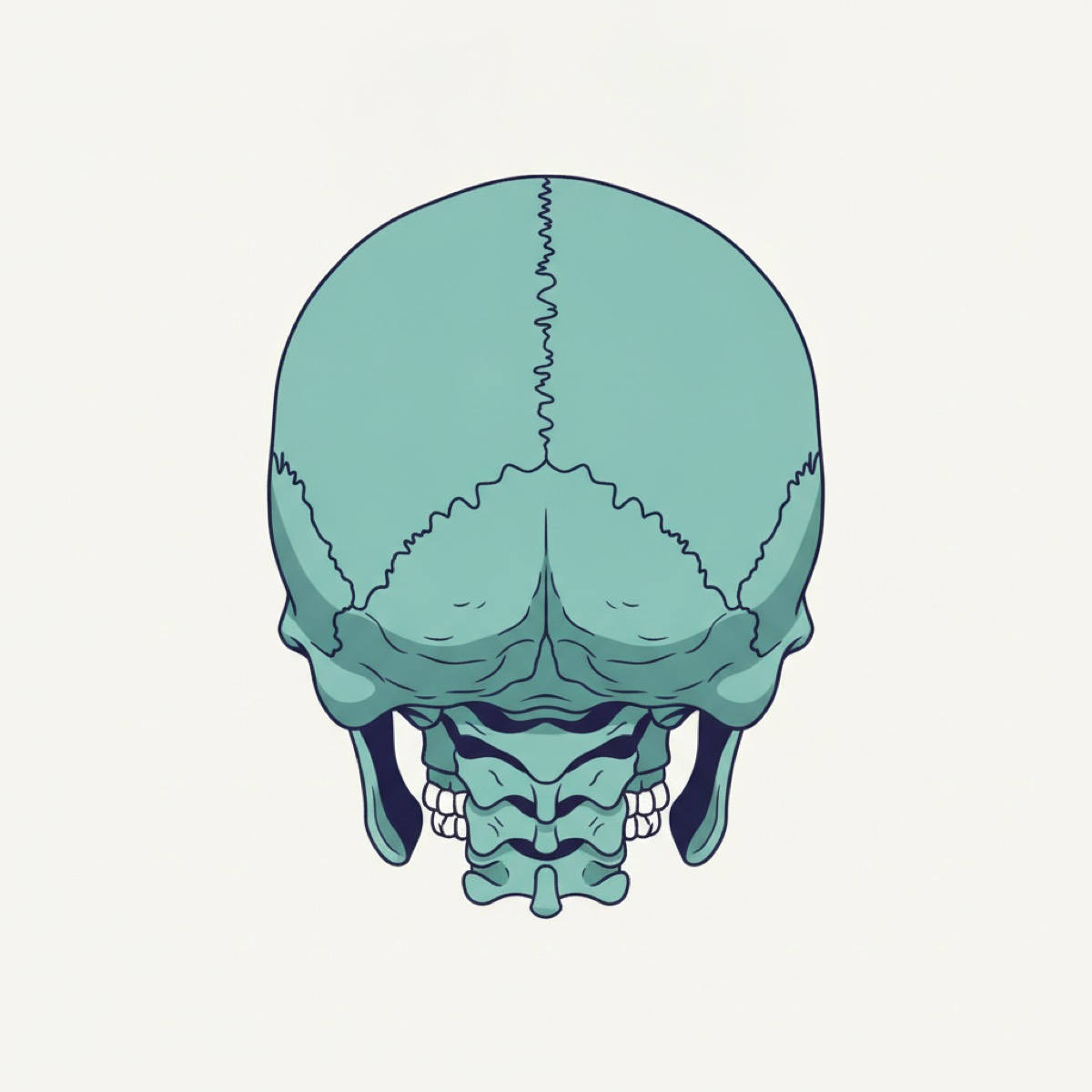
Understanding the Occipital Bone: A Key to Cranial Mobility
To appreciate the impact of occipital bone release, it's essential to understand its anatomy and perceived role in cranial dynamics. The external occipital protuberance (EOP), often felt as a small bump at the back of the skull where the neck muscles attach, serves as a primary landmark for this therapy [3]. This area is a nexus for various fascial connections, making its mobility vital for overall cranial health. When the occipital bone is believed to be out of optimal alignment, particularly when it has spread laterally, it can create a sensation akin to a tight "headband" or pressure around the skull.
The underlying principle of this release technique is that by gently encouraging the occipital bone to return to a more medial, or "inward," position, tensions that contribute to this lateral spreading can be alleviated. This subtle repositioning is thought to free up fascial restrictions, allowing the head to feel less constrained and more naturally balanced. The intricate web of fascia connecting the occiput to other facial and cranial structures means that even minor adjustments in this area can propagate beneficial effects across the entire head and face [4].
The Technique: A Gentle Approach to Occipital Release
The occipital bone release technique, as demonstrated by practitioners like Shogo Fujii, involves a precise and gentle sequence of steps focused on encouraging the occipital bone's inward movement. The process typically begins with careful palpation to locate the external occipital protuberance (EOP), which acts as the primary anatomical landmark.
Once the EOP is identified, the practitioner will gently grasp and pull the ear laterally. This specific action is believed to create a subtle loosening or "slack" in the fascial tissues around the EOP, preparing the area for the subsequent release. With the ear held in this position, the practitioner then applies a very light, inward pressure to the occipital bone, specifically targeting the area just lateral to the EOP. The intention is not to force the bone but to encourage its natural tendency to return to a more central alignment [5].
Throughout the process, controlled breathing is often incorporated, with the client encouraged to inhale through the nose and exhale slowly through the mouth. This deep breathing can further facilitate relaxation and enhance the effectiveness of the fascial release. The touch is typically very subtle; clients often report feeling a gentle pull on the ear but may not perceive strong pressure on the bone itself, yet the bone is observed to move effectively. The key is to "tuck in" or "put away" the occipital bone, guiding it medially to alleviate the perceived lateral spread.
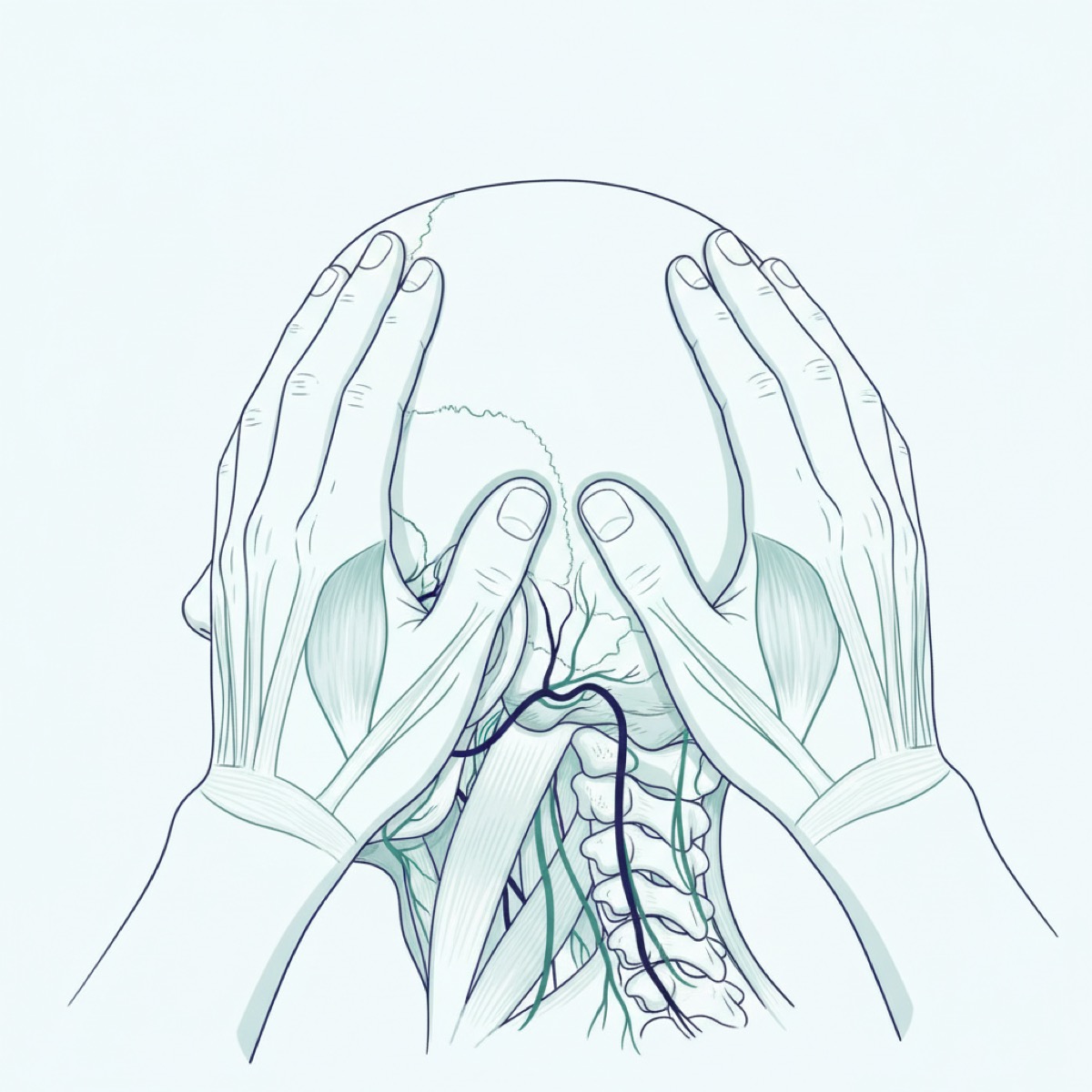
What to Expect During and After an Occipital Bone Release Session
During an occipital bone release session, clients typically experience a sense of deep relaxation. The practitioner's touch is gentle, often described as a subtle engagement rather than a forceful manipulation. While the primary sensation might be the gentle pulling of the ear, the underlying cranial adjustment is usually imperceptible to the client, yet observable by the skilled practitioner. Many report a feeling of increasing lightness in the head as the session progresses, a sign that fascial tensions are being released and cranial mobility is improving.
Immediately after the release, clients frequently notice a range of positive changes. A common observation is that the head feels significantly lighter and less "heavy." Visually, there can be a noticeable improvement in facial contouring, with some reporting a more refined jawline, lifted cheeks, and a reduction in the perceived "squareness" of the head. Eyes often appear more open and brighter, and the overall facial expression can seem more relaxed and balanced [6]. These changes, while subtle, can contribute to a significant improvement in both comfort and self-perception, reinforcing the interconnectedness of cranial structure and facial aesthetics.

Frequently asked questions
Is occipital bone release painful? — No, occipital bone release is typically a very gentle and non-invasive technique. Practitioners use light touch and subtle movements, often described as a soft engagement with the tissues rather than a forceful manipulation. Most individuals find the experience relaxing, with sensations of lightness or release rather than pain.
How many sessions are needed to see results from occipital bone release? — The number of sessions required can vary depending on individual needs and the practitioner's assessment. Some clients report immediate positive changes after just one session, such as a lighter head feel or improved facial contouring. For more lasting results or to address chronic tension, a series of sessions may be recommended to reinforce the changes and allow the body to integrate the new alignment.
Are the results of occipital bone release permanent? — While occipital bone release can provide significant and often lasting benefits, the body is constantly responding to daily stresses, postures, and habits. Therefore, the permanence of results can vary. Many clients experience sustained improvements, but periodic "tune-up" sessions may be beneficial to maintain optimal cranial mobility and fascial balance. Adopting good posture and stress management techniques can also help prolong the positive effects.
References
- [1]Schleip R. Fascial plasticity — a new neurobiological explanation. J Bodyw Mov Ther. 2003;7(1):11–19.
- [2]Wilke J, Krause F, Vogt L, Banzer W. What Is Evidence-Based About Myofascial Chains? A Systematic Review. Arch Phys Med Rehabil. 2016;97(3):454–461.
- [3]Krause F, Wilke J, Vogt L, Banzer W. Intermuscular force transmission along myofascial chains: a systematic review. J Anat. 2016;228(6):910–918.
- [4]Stecco C, Stern R, Porzionato A, et al. Hyaluronan within fascia in the etiology of myofascial pain. Surg Radiol Anat. 2011;33(10):891–896.
- [5]Ajimsha MS, Al-Mudahka NR, Al-Madzhar JA. Effectiveness of myofascial release: a systematic review of randomized controlled trials. J Bodyw Mov Ther. 2015;19(1):102–112.
- [6]Tozzi P, Bongiorno D, Vitturini C. Fascial release effects on patients with non-specific cervical or lumbar pain. J Bodyw Mov Ther. 2011;15(4):405–416.
Related videos

Palpation X-Ray #84 | Is the Sacrum Really a Flat Plate? It's a Wedge, Wide at the Top and Narrowing Downward — Trace Down from the Lumbar Spine and Confirm at Gluteus Maximus
0:56
Dramatic Improvement in One Session: Manual Approach to the Pelvic Girdle, with Palpation of Anatomical Landmarks and Movement Assessment Before and After (Hands-On Demo)
5:48